
If you’re entering the world of franchising, understanding your lease is just as important as understanding your franchise agreement. A franchise lease agreement is one of the most consequential documents you’ll sign — and one of the most misunderstood.
Here’s what you need to know.
What Is a Franchise Lease Agreement?
A franchise lease agreement is a commercial lease specifically designed for a franchised business. It governs the physical location where the franchisee operates — but unlike a standard retail lease, it layers in requirements and protections from the franchisor as well.
It is not the same as the franchise agreement, which covers brand rights, royalties, and training. The franchise lease is strictly about the real estate.
The Three Parties Involved
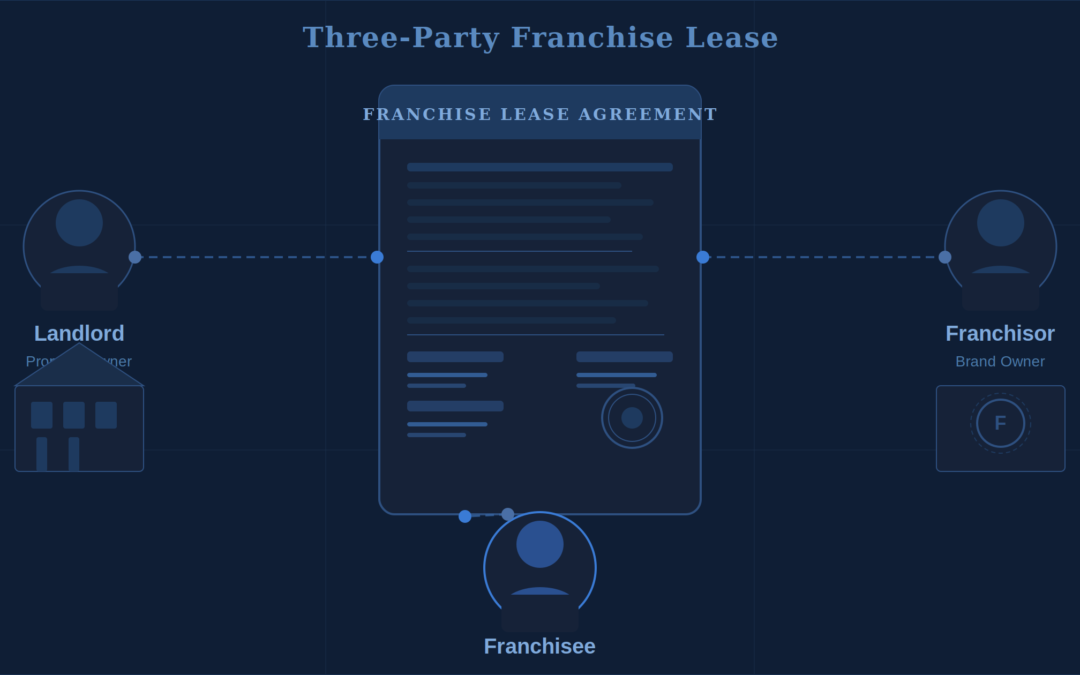
One of the key things that sets a franchise lease apart from a standard retail lease is the number of parties involved:
- Landlord — the property owner
- Franchisee — the tenant operating the business
- Franchisor — the brand owner with approval and control rights over the lease
This three-party dynamic creates a more complex negotiation process. The franchisor’s interests and the landlord’s interests don’t always align — and the franchisee is often caught in the middle.
How Franchise Leases Differ From Standard Retail Leases
| Issue | Standard Retail Lease | Franchise Lease |
|---|---|---|
| Parties | Landlord & Tenant | Landlord, Tenant & Franchisor |
| Approval Rights | None | Franchisor must approve site & lease |
| Lease Rider | Rare | Mandatory franchisor addendum |
| Operational Controls | Minimal | Must meet brand standards |
| Franchisor Rights | None | Step-in, cure, assignment, notice rights |
| Tenant Entity | Any business | Must match franchisor requirements |
Common Franchisor Lease Rider Provisions
Most franchisors require a lease rider or addendum that grants them specific protections, including:
- The right to receive notices of default directly from the landlord
- The right to cure tenant defaults to keep the location open
- The right to assume the lease if the franchisee fails
- The right to assign the lease to a new franchisee
- Restrictions on altering the premises without franchisor approval
These provisions are designed to protect the franchisor’s brand continuity — but they can also limit your flexibility as a franchisee.
Who Signs the Franchise Lease?
In most cases, the franchisee signs the lease directly as the tenant. In some systems, the franchisor signs a master lease and subleases to the franchisee — but this is less common.
Franchisees are frequently required to provide personal guaranties, even when operating through an LLC or corporation. This means your personal assets could be on the line if the business fails.
Why Franchise Lease Agreements Matter
A poorly negotiated franchise lease can have serious consequences:
- Increased personal liability
- Higher operating costs (CAM charges, taxes, build-out requirements)
- Limited exit options if you need to sell or close
- Conflicts with franchisor requirements
- Risk to your franchise license itself
Negotiating a franchise lease requires balancing the demands of both the landlord and the franchisor — while protecting your own interests as the operator.
Get Legal Guidance Before You Sign
Franchise lease agreements are complex documents with long-term financial and legal implications. Before signing, it’s strongly recommended to work with an attorney who understands both commercial real estate and franchise law.
Brent Levison has extensive experience in franchise and commercial law. If you have questions about a franchise lease agreement or need guidance before signing, contact us today.
The information in this article is provided for general informational purposes only and does not constitute legal advice. For advice specific to your situation, please consult a qualified attorney.